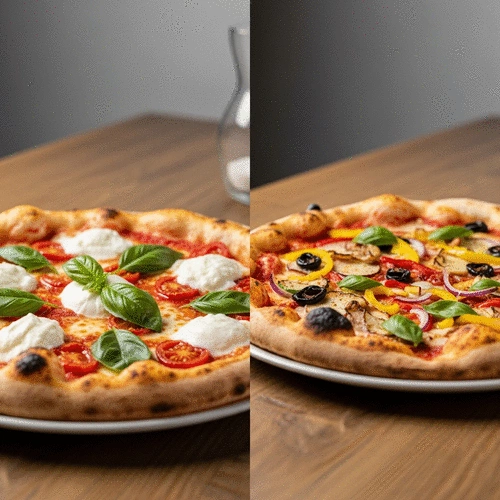
As culinary traditions intertwine with vibrant flavors, understanding the nuances between Neapolitan and Roman pizza can enhance your dining experience. Each style carries its own heritage, inviting you to explore authentic tastes and textures that reflect their origins.
What You Will Learn
- Neapolitan pizza is characterized by its soft, airy crust, achieved through high hydration dough and a slow fermentation process lasting 24 to 72 hours.
- Signature ingredients for Neapolitan pizza include San Marzano tomatoes, Mozzarella di Bufala, and fresh basil, which create a harmonious flavor profile.
- Roman pizza features a thin, crisp crust, rolled out for a crunchier texture, and is known for its creative toppings, including seasonal vegetables and unique combinations.
- Choosing between Neapolitan and Roman pizza depends on your dining context: Roman is perfect for a quick lunch, while Neapolitan offers a leisurely dining experience.
- Both pizza styles can accommodate dietary preferences, with options for vegan and gluten-free pizzas available.
- To elevate your pizza experience, consider pairing Neapolitan pizza with light wines and Roman pizza with robust reds for a delightful culinary journey.
Neapolitan vs. Roman Pizza: A Comparative Overview
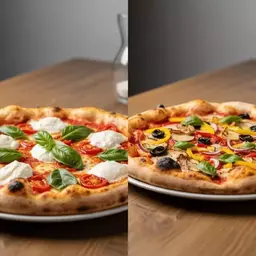
Delve into the distinct characteristics of Neapolitan and Roman pizzas, highlighting their unique doughs, toppings, and culinary approaches. This comparison will help you appreciate the nuances that make each style special. For more in-depth information, explore the differences between Neapolitan and Roman pizza.
Key Distinctions
While both are Italian, Neapolitan and Roman pizzas offer fundamentally different experiences.
Neapolitan Pizza
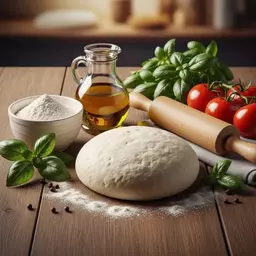
- Dough: Simple (flour, water, salt, yeast), 60-70% hydration, 24-72h fermentation.
- Crust: Soft, airy, puffed (cornicione), charred spots.
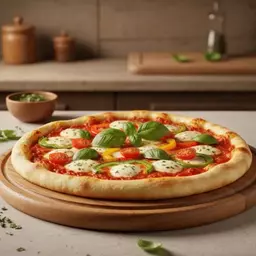
- Toppings: Minimalist, fresh (San Marzano tomatoes, Mozzarella di Bufala, basil).
- Bake: Wood-fired oven, very high heat, 60-90 seconds.
Roman Pizza
- Dough: Thinner, usually 00 + strong flour, lower hydration.
- Crust: Thin, crispy, sometimes cracker-like.
- Toppings: Creative, varied (Pizza Bianca, Pizza al Taglio, seasonal ingredients).
- Bake: Electric or gas oven, lower temperature, longer bake time.
Choosing Your Pizza Style
Neapolitan for:
- Leisurely dinners
- Intimate experiences
- Rich, soft textures
Roman for:
- Quick lunches
- Casual group meals
- Crispy, lighter feel
Understanding Neapolitan and Roman Pizza Styles
As a culinary enthusiast, I've always been fascinated by the rich traditions behind Italian pizza-making. At Casa Fatto, we celebrate two iconic styles: Neapolitan and Roman pizza. Each offers a unique taste experience that reflects its origins and the craftsmanship involved. Let's dive into what makes these styles so special!
What Defines Neapolitan Pizza?
Neapolitan pizza is often hailed as the classic representation of Italian pizza, with a history that dates back to the streets of Naples. One of the defining features of this beloved style is its dough, which is made from simple ingredients: flour, water, salt, and yeast. This dough undergoes a slow fermentation process, allowing it to develop a deliciously complex flavor.
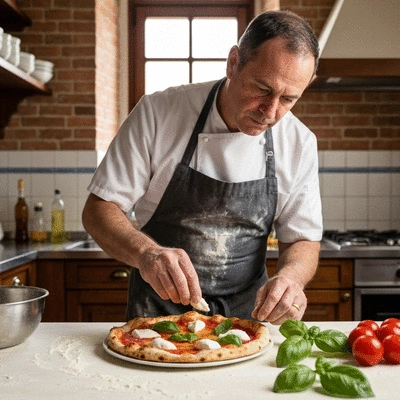
The Characteristic Dough and Fermentation Process
What truly sets Neapolitan pizza apart is the dough's hydration level, typically around 60-70%. This high hydration results in a soft and airy crust that puffs up beautifully when baked in a wood-fired oven. The fermentation period can last anywhere from 24 to 72 hours, enhancing the flavor further. If you ever visit us at Casa Fatto, you'll notice this freshness in every bite! To learn more about this traditional pizza, check out our article on Neapolitan pizza: a culinary journey.
Soft Crust and Unique Toppings
The characteristic soft crust of Neapolitan pizza is perfect for holding its unique toppings. Traditional toppings include fresh mozzarella, basil, and a drizzle of extra virgin olive oil. Each ingredient plays a role in creating a harmonious balance that transports you straight to Italy with every slice!
Signature Ingredients: San Marzano Tomatoes and Mozzarella di Bufala
- San Marzano tomatoes: Grown in the volcanic soil of Mount Vesuvius, these tomatoes are celebrated for their sweetness and low acidity.
- Mozzarella di Bufala: Made from the milk of water buffalo, this cheese is rich, creamy, and a vital part of Neapolitan pizza.
- Fresh basil: Adds a fragrant touch and vibrant color to the pizza.
These signature ingredients not only highlight the authenticity of Neapolitan pizza but also elevate the overall flavor profile. When I craft a Neapolitan pizza at Casa Fatto, I strive to honor these traditional elements that have stood the test of time.
What Defines Roman Pizza?
Now, let’s explore Roman pizza, a style that is equally adored but distinctly different. Roman pizza is known for its thin, crisp crust that contrasts beautifully with its innovative toppings. It is a testament to the creativity found in Roman cuisine!
The Signature Dough and Cooking Techniques
The dough for Roman pizza is typically rolled out thinner than its Neapolitan counterpart, leading to a crunchier texture. This style often uses a combination of 00 flour and strong flour to achieve that perfect crispness. At Casa Fatto, we follow traditional methods, ensuring every pizza is baked to perfection. You can easily order pizza online at Casa Fatto to experience this for yourself.
Thin, Crispy Crust and Creative Toppings
- Pizza Bianca: A classic Roman style topped with olive oil, rosemary, and salt, showcasing the dough’s flavor.
- Pizza al Taglio: Baked in large rectangular trays, it's cut into squares and often topped with a variety of ingredients.
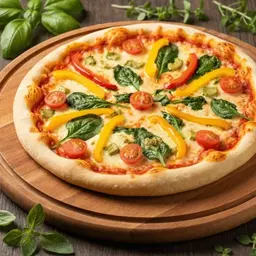
- Seasonal toppings: Romans love to experiment, so you'll find exciting combinations like artichokes, prosciutto, and even seasonal vegetables!
The focus on unique toppings in Roman pizza opens a world of flavors, making each visit to Casa Fatto an adventure in taste!
Popular Varieties: Pizza Bianca and Pizza al Taglio
When it comes to popular varieties, Pizza Bianca and Pizza al Taglio are often at the forefront. Pizza Bianca is perfect for those looking to savor the dough's essence, while Pizza al Taglio is crafted for shareability—ideal for gatherings with friends and family. I always encourage our customers to try these varieties for a true taste of Roman culture!
Pro Tip
When making pizza at home, consider investing in a pizza stone! This essential tool helps achieve that coveted crispy crust, akin to what you'd find in a traditional pizzeria. Preheat the stone in your oven for at least 30 minutes before baking your pizza to mimic the high temperatures of a wood-fired oven.
Deciding Between Neapolitan and Roman Pizza
Which Style Suits Your Craving?
Scenarios for Choosing: Quick Lunch vs. Leisurely Dinner
When it comes to choosing between Neapolitan and Roman pizza, your dining context plays a big role! If you find yourself in need of a quick lunch, the Roman style's thin, crispy crust is perfect for grabbing a slice on the go. In contrast, a leisurely dinner calls for the rich, soft textures of Neapolitan pizza, inviting you to savor each bite and enjoy the moment.
Think about your plans: a quick bite with friends or a relaxed evening with family? Both styles shine in different situations. Here are some scenarios to consider:
- Quick Lunch: Roman pizza is ideal for a fast yet satisfying meal.
- Casual Dinner: Neapolitan pizza offers a comforting, sit-down experience.
- Group Gathering: Roman pizza's variety can cater to everyone's tastes.
- Romantic Dinner: Neapolitan pizza creates an intimate, sharing experience.
Dietary Considerations and Preferences
At Casa Fatto, we celebrate inclusivity by offering both vegan and gluten-free options. When deciding between pizza styles, consider any dietary restrictions or preferences. Neapolitan pizza can be made with gluten-free crusts, while Roman pizzas often feature a wider variety of toppings, making them versatile for different diets.
Some popular dietary considerations include:
- Vegan Options: Both styles can be crafted with plant-based toppings.
- Gluten-Free Choices: Available for both Neapolitan and Roman pizzas at Casa Fatto.
- Low-Calorie Versions: Opt for lighter toppings to enjoy guilt-free.
- Nut Allergies: Always feel free to ask our staff about ingredient safety!
Enhancing Your Pizza Experience
Pairing Recommendations for Both Styles
Beverage Pairings and Side Dish Suggestions
To elevate your pizza experience, pairing it with the right beverages and sides can make all the difference! For Neapolitan pizza, I recommend a crisp white wine or a light Italian beer that complements the fresh flavors. On the other hand, Roman pizza pairs perfectly with a robust red wine or even a refreshing spritz. Here are some suggestions:
- Neapolitan: Light Chianti or a sparkling water.
- Roman: Full-bodied Pinot Noir or an Italian craft beer.
- Sides: Caprese salad or garlic bread enhance the meal perfectly!
Nutritional Insights on Pizza Styles
Nutrition is often a concern for pizza lovers, and understanding the differences between Neapolitan and Roman pizzas can help you make informed choices. Neapolitan pizzas generally have a thicker crust, which can mean more carbs. However, they are often topped with simple, fresh ingredients, making them a healthier option overall.
Conversely, Roman pizzas, with their thin crusts, can be lower in calories but may feature more indulgent toppings. Here’s a quick comparison:
- Neapolitan: Typically more filling due to thicker crust; focuses on fresh ingredients.
- Roman: Lighter and crispier, ideal for satisfying a craving without feeling overly full.
Food Pairing: Perfect Combinations for Neapolitan and Roman Pizza
To truly savor each bite, consider complementary food pairings. For Neapolitan pizza, try pairing with a light arugula salad topped with balsamic dressing. For Roman pizza, accompany it with hearty antipasto featuring cured meats and cheeses. These combinations enrich the overall dining experience and make each meal memorable!
Making Pizza at Home: Neapolitan vs. Roman
DIY Techniques for Neapolitan Pizza
If you’re feeling adventurous, making Neapolitan pizza at home can be a fun and rewarding experience! Start with a high-protein flour and let your dough rise slowly to develop those delicious flavors. Use a wood-fired oven if possible, as it mimics traditional techniques, but a pizza stone in your regular oven works too!
Steps for Preparing Roman Pizza at Home
For Roman pizza, the preparation is a bit different but just as enjoyable! Aim for a higher hydration dough, which allows for that characteristic crispiness. Roll it out thin, top with your favorite ingredients, and bake it on a preheated surface for an authentic result. Remember, both styles cater to a variety of tastes, showcasing the richness of Casa Fatto's Italian menu highlights.
Essential Tools: Choosing the Right Pizza Oven
No matter which style you choose to make at home, having the right tools is essential! A good pizza stone or a dedicated pizza oven can significantly impact your results. Here’s what you need:
- Pizza Stone: Helps achieve a crispy crust.
- Wood-Fired Oven: Ideal for authentic Neapolitan pizza.
- Thermometer: Ensures your oven is at the right temperature.
Frequently Asked Questions (FAQs)
Q: What is the main difference between Neapolitan and Roman pizza?
A: Neapolitan pizza is known for its soft, airy, and chewy crust due to high hydration and slow fermentation, while Roman pizza features a thin, crispy, and sometimes cracker-like crust, often with lower hydration dough.
Q: What are the signature ingredients of Neapolitan pizza?
A: Signature ingredients for Neapolitan pizza include San Marzano tomatoes, Mozzarella di Bufala, and fresh basil, all contributing to its harmonious and traditional flavor profile.
Q: Can I find vegan or gluten-free options for both Neapolitan and Roman pizzas?
A: Yes, both Neapolitan and Roman pizza styles can accommodate dietary preferences, with options for vegan toppings and gluten-free crusts often available at restaurants like Casa Fatto.
Q: When should I choose Neapolitan pizza over Roman, or vice versa?
A: Neapolitan pizza is ideal for a leisurely, intimate dining experience due to its rich, soft textures. Roman pizza, with its crispy, lighter feel, is perfect for a quick lunch, casual group meals, or when you prefer a cracker-like crust.
Q: What are some recommended beverage pairings for each pizza style?
A: For Neapolitan pizza, a crisp white wine or a light Italian beer complements the fresh flavors. Roman pizza pairs well with a robust red wine or a refreshing spritz.
Recap of Key Points
Here is a quick recap of the important points discussed in the article:
- Neapolitan pizza is characterized by its soft, airy crust and traditional toppings like fresh mozzarella and basil.
- The dough for Neapolitan pizza undergoes a slow fermentation process, enhancing its flavor over 24 to 72 hours.
- Roman pizza features a thin, crispy crust, often with innovative toppings, making it ideal for quick meals and sharing.
- Consider your dining context: Roman pizza is great for a quick lunch, while Neapolitan is perfect for a leisurely dinner.
- Both pizza styles can accommodate dietary preferences, including vegan and gluten-free options.
- Pairing beverages thoughtfully can enhance your pizza experience: white wine for Neapolitan and robust red for Roman.
- Making pizza at home can be rewarding; focus on the right dough technique and tools for each style.